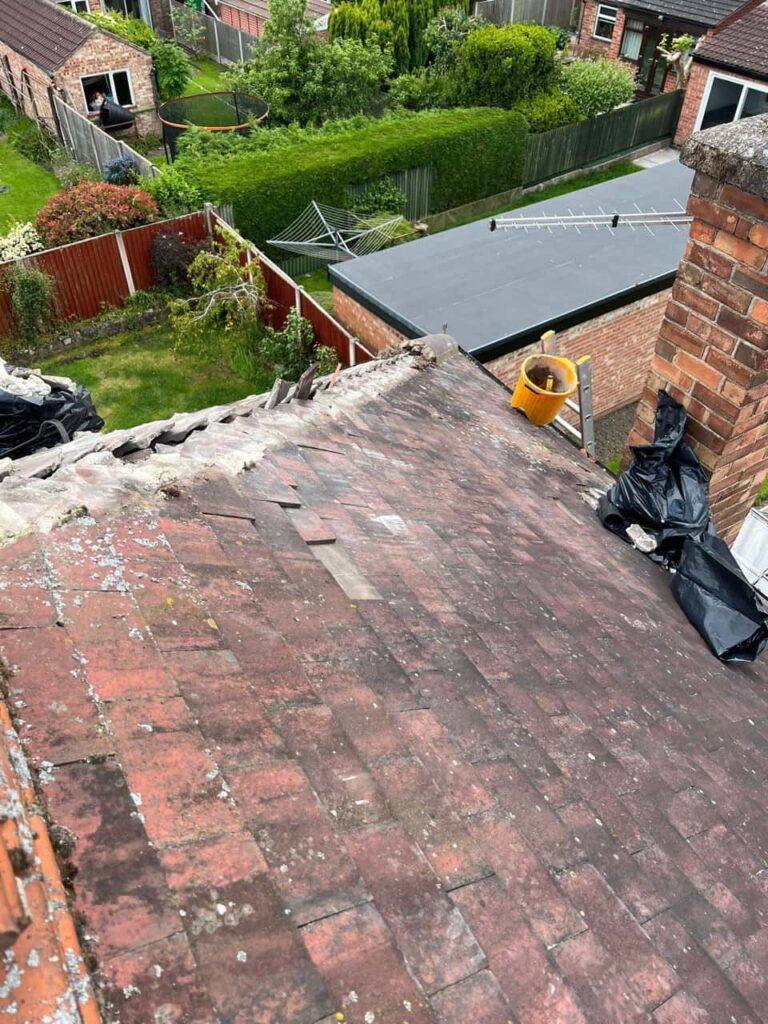
A roof leak can begin with a small defect that is easy to overlook, but even minor water penetration can gradually affect ceilings, insulation, timber and internal finishes. Identifying the warning signs early helps homeowners address roofing problems before they develop into more extensive damage.
Roof leaks do not always appear directly beneath the source of the problem. Water can travel along roof timbers, under felt or through insulation before becoming visible inside the property. Understanding the common causes and knowing what signs to look for can make it easier to recognise when professional attention is needed.
For homeowners in Keyworth, Nottingham, Keyworth Roofing Repairs provides professional roofing repair services to help identify defects, investigate water ingress and restore the condition of damaged roof areas.
Common Reasons Why Roofs Develop Leaks
Roof leaks can occur for several reasons, including ageing materials, damaged components and poor weather resistance. Recognising the source is essential because an effective repair needs to address the underlying defect rather than simply covering the visible signs of water damage.
Slipped, Cracked or Missing Roof Tiles
Roof tiles provide an important protective layer against rainwater. Over time, individual tiles can crack, become displaced or fall away following strong winds, accidental impact or deterioration of their fixings.
Even a small gap in the roof covering can allow rainwater to reach the layers beneath. Homeowners may notice damp patches on ceilings, water marks in loft spaces or daylight visible through the roof structure.
A visual inspection from ground level may reveal missing or uneven tiles, although closer examination is usually needed to identify less obvious defects.
Damaged Roof Flashing
Flashing is installed around vulnerable roof junctions, including chimneys, roof valleys and abutments where the roof meets a wall. Its purpose is to prevent water from entering through these exposed connections.
Lead flashing can develop splits, loosen at its edges or become displaced as materials age and buildings experience movement. When this happens, rainwater may penetrate around the junction even if the surrounding tiles remain in good condition.
Signs of flashing problems can include damp patches near chimney breasts, staining around upper walls or moisture appearing in loft spaces after rainfall.
Blocked or Damaged Roof Valleys
Roof valleys channel rainwater from adjoining roof slopes towards the guttering. Because they collect water from relatively large sections of the roof, they need to remain clear and in good condition.
Leaves, moss and other debris can obstruct water flow, while damaged valley linings may allow moisture to penetrate beneath the roof covering. Repeated dampness around the roof junction or water stains near the edges of internal ceilings may indicate a problem.
Regular inspection helps identify accumulated debris and visible deterioration before water begins entering the property.
Faulty Gutters and Downpipes
Although guttering is not part of the main roof covering, defects in the drainage system can contribute to damp problems around roof edges and external walls.
Blocked gutters can overflow during rainfall, allowing water to run down masonry or collect around the eaves. Loose joints, cracks and poorly positioned downpipes can create similar problems.
Homeowners should look for overflowing gutters, visible leaks at joints, sagging sections and damp marks on external walls. These symptoms can help distinguish a drainage issue from a defect within the roof covering.
Deteriorating Flat Roof Materials
Flat roofs are particularly dependent on the condition of their waterproof covering and drainage arrangements. Felt, membranes and other materials can deteriorate over time, developing splits, blisters, open seams or damaged edges.
Standing water may also indicate inadequate drainage or changes in the roof’s surface levels. If moisture penetrates through a damaged covering, it can affect the roof deck and insulation beneath.
Regular checks for surface defects, pooling water and loose edges can help identify problems before they spread.
How to Recognise Early Warning Signs Inside Your Property
Not every roofing defect is immediately visible from outside. Internal signs can provide useful clues that water is entering through the roof.
Look out for:
- Brown or yellow ceiling stains, particularly after rainfall.
- Peeling paint or bubbling plaster near the ceiling.
- Damp or musty smells in loft spaces.
- Wet insulation or visible moisture on roof timbers.
- Dripping water around ceiling lights or upper-floor walls.
It is important not to assume that the visible damp patch marks the exact location of the leak. Water can travel some distance before reaching the ceiling, so identifying the original entry point may require a thorough roof inspection.
If water is near electrical fittings, avoid touching the affected area or using the fitting and arrange appropriate professional assistance.
Why Prompt Roof Leak Repairs Matter
Leaving a roof leak unresolved can allow moisture to spread into surrounding materials. Persistent dampness may damage plasterboard, timber components and insulation, while prolonged exposure can encourage timber decay and mould growth.
A prompt inspection helps establish whether the problem comes from damaged tiles, flashing, valleys, guttering or another vulnerable section. Once the cause is identified, suitable repairs can be carried out to restore the roof’s protective function.
Keyworth Roofing Repairs can help homeowners in Keyworth, Nottingham identify roofing defects and determine the appropriate repair work for their property.
Conclusion
Roof leaks commonly result from damaged tiles, defective flashing, blocked valleys, faulty guttering and deteriorating flat roof coverings. Recognising early warning signs such as ceiling stains, damp loft insulation and overflowing gutters can help homeowners take action before the problem becomes more serious.
If you have noticed signs of water ingress or suspect damage to your roof, contact Keyworth Roofing Repairs to discuss your concerns and arrange a professional roof inspection in Keyworth, Nottingham.
Call us on: 0115 647 1193
Click here to find out more about Keyworth Roofing Repairs
Click here to complete our contact form and see how we can help with your roofing needs.