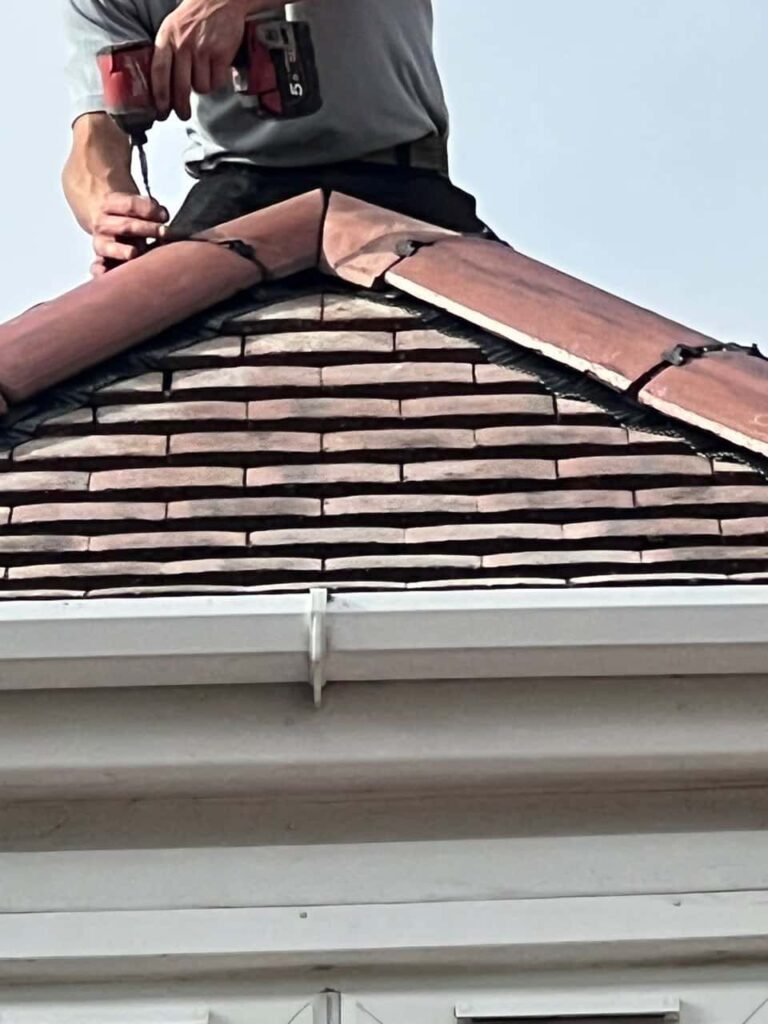
A Methodical Approach to Identifying the Source of Water Ingress
When water appears on a ceiling or wall, it is natural to assume that the roof defect sits directly above it. In practice, rainwater can enter through one area and travel along the underlay, rafters or other components before becoming visible elsewhere.
This makes roof leak detection more complex than simply locating the nearest damaged tile. Establishing the true entry point requires the internal signs, weather conditions and external roof details to be considered together.
Pay Attention to When the Leak Appears
The timing of a leak can reveal important information about its likely cause. Water that appears immediately during rainfall may indicate a direct opening, while dampness developing later can suggest that moisture is collecting before reaching the interior.
Useful details to record include:
- Whether the leak occurs during light or heavy rain
- How long the rain has been falling before dampness appears
- Whether strong winds are present
- Which direction the rain is coming from
- How quickly the area dries afterwards
- Whether the problem happens every time it rains
A leak that occurs only during wind-driven rain may involve a tile, flashing detail or junction exposed from a particular direction.
Follow the Moisture Upwards Inside the Property
The visible drip is often the final point in the water’s journey rather than its source. Where the loft can be accessed safely, look for signs of moisture above and around the affected room.
These may include:
- Damp or darkened timbers
- Watermarks on rafters
- Wet insulation
- Staining on the underside of the roof covering
- Moisture around nails or other fixings
- Dampness near chimneys, vents and adjoining walls
Tracing the highest visible sign can help narrow down the entry area. However, insulation and timber may divert water, so internal evidence alone may not provide a complete answer.
Inspect the Roof Covering From a Safe Position
Some defects can be observed from ground level. Missing tiles, slipped slates, uneven roof lines or displaced ridge materials may point towards a possible entry point.
Binoculars or a camera zoom can help with an initial visual check, but avoid climbing onto the roof. Wet coverings can be slippery, and a damaged section may not support weight safely. A ground-level observation should be used to gather information before arranging a professional inspection.
Examine Flashing and Roof Junctions
Many persistent leaks begin where the roof meets another surface. Flashing and junctions must redirect water while allowing for normal movement between different materials.
Areas requiring close attention include:
- Chimney flashing
- Roof valleys
- Abutments against walls
- Skylights and roof windows
- Vent pipes
- Changes in roof pitch
- Connections between different roof coverings
A small crack, gap or lifted edge at one of these points can admit water without creating an obvious hole.
Consider the Condition of Tiles and Slates
A tile does not always need to be missing completely before it causes a problem. Cracks, slight displacement and worn fixings can create openings that are difficult to see from below.
Water may also pass beneath apparently intact tiles if wind drives rain upwards through a gap. The condition of the underlay then becomes important. If it is damaged or deteriorated, moisture can reach the roof structure and interior more easily.
Check Valleys, Gutters and Drainage Routes
Blocked or damaged drainage can imitate a roof-covering defect. Leaves, moss and other debris may restrict the flow of rainwater through gutters, outlets and valleys.
When water cannot drain normally, it may overflow behind fascias, back up beneath tiles or collect around vulnerable junctions. Warning signs include:
- Gutters overflowing during rainfall
- Debris gathered in roof valleys
- Standing water on flat sections
- Staining below the roofline
- Dampness concentrated near external edges
Clearing an obstruction may restore the flow, but surrounding materials should still be checked for deterioration caused by repeated saturation.
Rule Out Condensation
Not every damp patch is caused by rain entering through the roof. Condensation can develop when warm, moisture-laden air meets a cold surface within the roof space.
Condensation is often more widespread than a roof leak and may appear on the underside of roofing materials, around metal fixings or within insulation. It can be influenced by ventilation and moisture moving upwards from the rooms below.
However, condensation and water ingress can occur at the same time. A proper assessment should consider both possibilities rather than assuming one explanation immediately.
Why Temporary Patching Can Miss the Problem
Applying sealant to a visible gap may stop a leak briefly, but it can fail if the actual entry point lies elsewhere. It may also divert water along a different route without preventing it from getting beneath the covering.
Repeated leaks often occur because:
- Only the internal symptom was treated
- Water is entering through several defects
- A failed junction was overlooked
- The underlay is damaged
- The surrounding materials have also deteriorated
- Drainage is contributing to the problem
An effective repair should correct the defect and confirm that the nearby roof components remain serviceable.
The Value of a Professional Roof Inspection
A professional inspection brings together the internal evidence and external roof condition. Tiles, flashing, valleys, roof penetrations, drainage and previous repair areas can all be assessed as part of the same investigation.
For a property in Keyworth, Nottingham, this methodical approach helps establish whether the leak is caused by one localised defect or more widespread deterioration. It also reduces the risk of unnecessary work being carried out in the wrong area.
Conclusion
Finding the real source of a roof leak involves more than looking directly above the damp patch. Water can travel along timbers and underlay, while damaged flashing, displaced tiles, blocked drainage and condensation can produce similar warning signs.
If you have noticed dripping, ceiling stains or unexplained dampness, Keyworth Roofing Repairs can inspect your roof and identify the most likely cause. Contact the team to arrange an assessment and determine the appropriate repair.
Call us on: 0115 647 1193
Click here to find out more about Keyworth Roofing Repairs
Click here to complete our contact form and see how we can help with your roofing needs.
A Methodical Approach to Identifying the Source of Water Ingress
When water appears on a ceiling or wall, it is natural to assume that the roof defect sits directly above it. In practice, rainwater can enter through one area and travel along the underlay, rafters or other components before becoming visible elsewhere.
This makes roof leak detection more complex than simply locating the nearest damaged tile. Establishing the true entry point requires the internal signs, weather conditions and external roof details to be considered together.
Pay Attention to When the Leak Appears
The timing of a leak can reveal important information about its likely cause. Water that appears immediately during rainfall may indicate a direct opening, while dampness developing later can suggest that moisture is collecting before reaching the interior.
Useful details to record include:
- Whether the leak occurs during light or heavy rain
- How long the rain has been falling before dampness appears
- Whether strong winds are present
- Which direction the rain is coming from
- How quickly the area dries afterwards
- Whether the problem happens every time it rains
A leak that occurs only during wind-driven rain may involve a tile, flashing detail or junction exposed from a particular direction.
Follow the Moisture Upwards Inside the Property
The visible drip is often the final point in the water’s journey rather than its source. Where the loft can be accessed safely, look for signs of moisture above and around the affected room.
These may include:
- Damp or darkened timbers
- Watermarks on rafters
- Wet insulation
- Staining on the underside of the roof covering
- Moisture around nails or other fixings
- Dampness near chimneys, vents and adjoining walls
Tracing the highest visible sign can help narrow down the entry area. However, insulation and timber may divert water, so internal evidence alone may not provide a complete answer.
Inspect the Roof Covering From a Safe Position
Some defects can be observed from ground level. Missing tiles, slipped slates, uneven roof lines or displaced ridge materials may point towards a possible entry point.
Binoculars or a camera zoom can help with an initial visual check, but avoid climbing onto the roof. Wet coverings can be slippery, and a damaged section may not support weight safely. A ground-level observation should be used to gather information before arranging a professional inspection.
Examine Flashing and Roof Junctions
Many persistent leaks begin where the roof meets another surface. Flashing and junctions must redirect water while allowing for normal movement between different materials.
Areas requiring close attention include:
- Chimney flashing
- Roof valleys
- Abutments against walls
- Skylights and roof windows
- Vent pipes
- Changes in roof pitch
- Connections between different roof coverings
A small crack, gap or lifted edge at one of these points can admit water without creating an obvious hole.
Consider the Condition of Tiles and Slates
A tile does not always need to be missing completely before it causes a problem. Cracks, slight displacement and worn fixings can create openings that are difficult to see from below.
Water may also pass beneath apparently intact tiles if wind drives rain upwards through a gap. The condition of the underlay then becomes important. If it is damaged or deteriorated, moisture can reach the roof structure and interior more easily.
Check Valleys, Gutters and Drainage Routes
Blocked or damaged drainage can imitate a roof-covering defect. Leaves, moss and other debris may restrict the flow of rainwater through gutters, outlets and valleys.
When water cannot drain normally, it may overflow behind fascias, back up beneath tiles or collect around vulnerable junctions. Warning signs include:
- Gutters overflowing during rainfall
- Debris gathered in roof valleys
- Standing water on flat sections
- Staining below the roofline
- Dampness concentrated near external edges
Clearing an obstruction may restore the flow, but surrounding materials should still be checked for deterioration caused by repeated saturation.
Rule Out Condensation
Not every damp patch is caused by rain entering through the roof. Condensation can develop when warm, moisture-laden air meets a cold surface within the roof space.
Condensation is often more widespread than a roof leak and may appear on the underside of roofing materials, around metal fixings or within insulation. It can be influenced by ventilation and moisture moving upwards from the rooms below.
However, condensation and water ingress can occur at the same time. A proper assessment should consider both possibilities rather than assuming one explanation immediately.
Why Temporary Patching Can Miss the Problem
Applying sealant to a visible gap may stop a leak briefly, but it can fail if the actual entry point lies elsewhere. It may also divert water along a different route without preventing it from getting beneath the covering.
Repeated leaks often occur because:
- Only the internal symptom was treated
- Water is entering through several defects
- A failed junction was overlooked
- The underlay is damaged
- The surrounding materials have also deteriorated
- Drainage is contributing to the problem
An effective repair should correct the defect and confirm that the nearby roof components remain serviceable.
The Value of a Professional Roof Inspection
A professional inspection brings together the internal evidence and external roof condition. Tiles, flashing, valleys, roof penetrations, drainage and previous repair areas can all be assessed as part of the same investigation.
For a property in Keyworth, Nottingham, this methodical approach helps establish whether the leak is caused by one localised defect or more widespread deterioration. It also reduces the risk of unnecessary work being carried out in the wrong area.
Conclusion
Finding the real source of a roof leak involves more than looking directly above the damp patch. Water can travel along timbers and underlay, while damaged flashing, displaced tiles, blocked drainage and condensation can produce similar warning signs.
If you have noticed dripping, ceiling stains or unexplained dampness, Keyworth Roofing Repairs can inspect your roof and identify the most likely cause. Contact the team to arrange an assessment and determine the appropriate repair.
Call us on: 0115 647 1193
Click here to find out more about Keyworth Roofing Repairs
Click here to complete our contact form and see how we can help with your roofing needs.